
Schools often have grants and opportunities for artists in residence. In the days leading up towards Spring Break 2025 Sand Northrup from The One Woman Circus came to our school to teach us some circus skills – balancing, juggling, plate spinning, and more!
Starting in a circle, we listened to the learning expectations:
1 – The following skills require a lot of concentration.
2 – Work for yourself. Give yourself some space from your friends so you can focus on the trick.
3 -You must remain silent to concentrate better. Before starting, it is always good to take a breath.
4 – There will be time to share next week. Today is for practice.
The first activity was to balance a peacock feather on our hand. Sand told us that we had to place the feather upright on our hand and look at the top of the feather. If we looked at the bottom, the feather would fall. After receiving our feathers, we each found our own space and began practicing.
In the silence, we could hear Sand giving feedback to some. Some hadn’t heard the first time that they needed to look up and received a reminder. Others received a “bravo,” and some got the tip to follow the feather wherever it moved. With concentration, everyone improved.
However, some forgot the expectations and wanted to share with their friends, show off their trick, or ask the coach for help or attention. They didn’t just affect their own practice but also that of their friends and others around them. Meanwhile, they lost time they could have spent trying and practicing. They were no longer working for themselves but rather to show others or gain the coach’s attention.
After a couple reminders and with more practice, everyone progressed, and Sand showed us how we could apply the same idea in another context—balancing the feather on a finger, the chin, the knee, the elbow, or the foot. The next level was to stand on one foot while balancing the feather on the elbow. Then, to transfer the feather from one place to another. There was always a new challenge to take on, and everyone had their own journey.
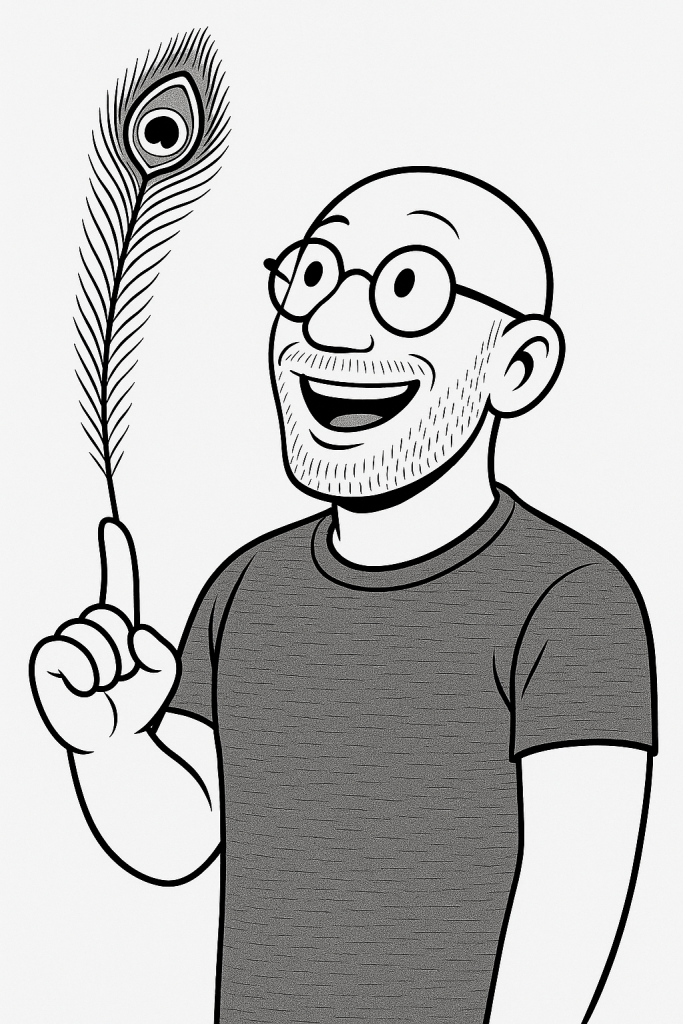
And so, we got back to work, the feathers balanced because of our focus and attention. When it fell, we didn’t need to feel discouraged or stop, we just had to stay calm, breathe, and try again. When succeeding, it was enough to simply keep going and push ourselves toward the next level without trying to show off to others. That is the true practice of working for oneself.
In the end, this feather became a lesson in learning. There is a time for practice and a time for sharing. We need space and silence to be fully present with the subject and to intentionally try multiple times in order to make progress. With progress, we can eventually share with more confidence and pride. Ultimately, we must find the silence within ourselves, which will turn into self-confidence, and by practicing, we improve.
This was Coach Sand’s last workshop before retirement. We were so grateful to have learned from her and wish her a well-deserved retirement!
Do you see yourself in this story? Leave a comment!
Which of Sand’s learning expectations spoke to you the most? Why?
How can we teach “working for yourself” versus working for a result? How do assessment and reporting fit into this idea?
The feather is now a metaphor for presence and learning. What other metaphors for presence and/or learning have you come across in your practice?
Autios! À la prochaine!
Bibliography
OpenAI. (2025). [Monsieur Autio Balances a Peacock Feather On His Finger] [AI-generated image]. ChatGPT. https://chat.openai.com/

 Monsieur Autio
Leave a comment